
The Power Couple: How AI Integrations Supercharge Warehouse Robotics
“We see this as validation of what we tell every warehouse operator: start with the task that's hurting people and costing you overtime, not the task that looks coolest to automate — that's where the 15-25% labor cost reduction actually lives on the P&L.”
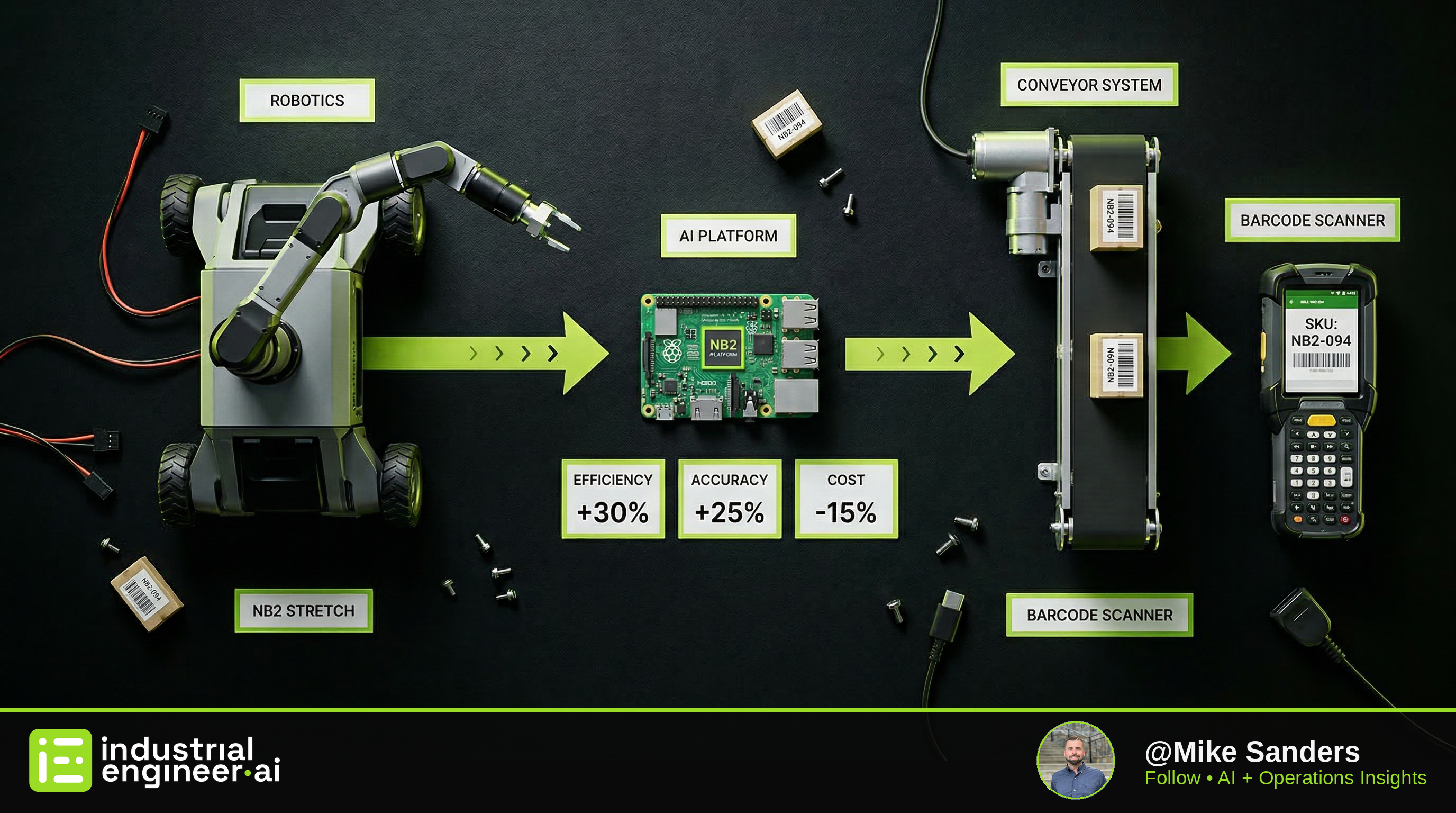
Deploying purpose-built robots like Boston Dynamics' Stretch for repetitive case-handling tasks in warehouses directly attacks the two biggest P&L drains in logistics: injury-related downtime (repetitive lifting accounts for roughly 30% of warehouse injuries per BLS data) and the unpredictable labor costs of peak-season scaling. The key operational shift isn't full automation — it's using robotics as a flexible capacity layer that handles the high-volume, high-injury tasks so your existing workforce focuses on complex picks and exception handling. Warehouses running robotic case handling alongside human workers are reporting 15-25% reductions in labor cost per unit shipped during peak periods.
From the Source
"We're not trying to replace people — we're trying to take the most repetitive, physically demanding tasks off their plate so they can focus on the work that actually requires human judgment."
— EP 624: Bringing Robotics to the Warehouse Floor with Boston Dynamics
Key Takeaways
- 01Repetitive lifting tasks drive ~30% of warehouse injuries (BLS benchmark), making them the highest-ROI target for robotic deployment
- 02Boston Dynamics' Stretch robot is purpose-built for truck unloading and case handling — the most physically demanding warehouse tasks
- 03Robotics deployed as a flexible capacity layer reduces peak-season labor cost variability by 15-25% (industry benchmark)
- 04Field application engineering — not just hardware drops — is critical; Boston Dynamics embeds engineers like Madi Weiss to tune robots to specific facility workflows
- 05The integration model matters: robots augment human workers on high-injury tasks rather than replacing entire workflows
Watch the Source
EP 624: Bringing Robotics to the Warehouse Floor with Boston Dynamics
Source
EP 624: Bringing Robotics to the Warehouse Floor with Boston Dynamics
Video embedded above — watch without leaving the site
Extracted and verified via Adversarial AI Pipeline
Get the IE.AI Weekly Brief
Top 3 AI-distilled industrial engineering insights, every Sunday. No fluff.
No spam. Unsubscribe anytime with one click.